Castello’sCoco Huts

Choose where to book

Castello’s Coco Huts is listed on five booking platforms. Rates and availability live there, not on this website.

Things to do in South Goa

Five stretches of coast and country, and what is actually worth your time in each. No tours for sale, no invented distances — just the places locals will tell you to go.

The sea
Arabian Sea, west-facing
Nearest beaches
Benaulim, Colva
Forts
Cabo de Rama, Chapora, Aguada
World Heritage
Churches of Old Goa
Tours sold here
None
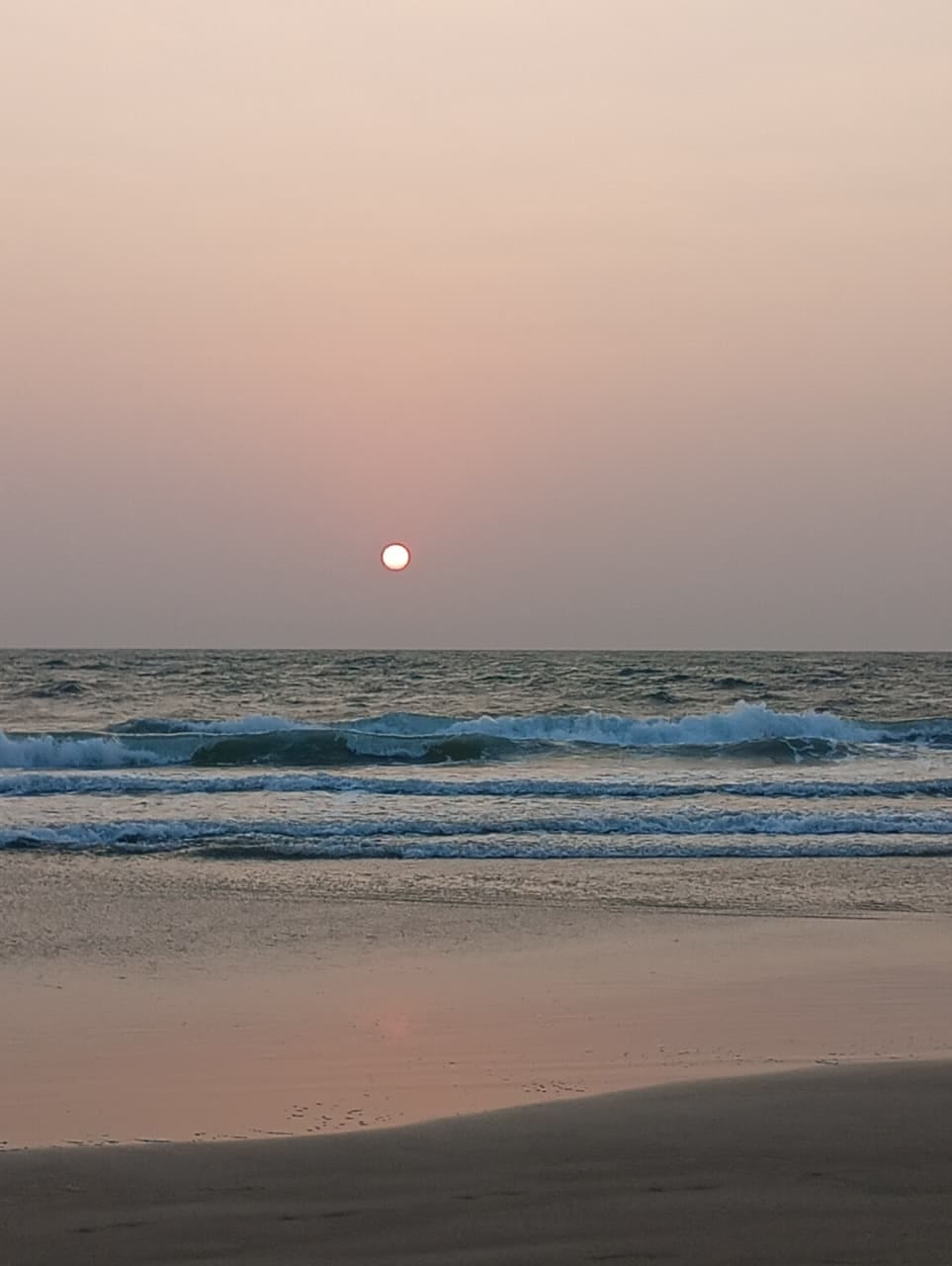
The sun setting into the Arabian Sea off Benaulim, with lines of surf breaking on wet sand in the foreground

Sunset over the Arabian Sea at Benaulim — SENISHA NAVELIM · CC BY 4.0. Photographs on this page show the surrounding area, not the property.

On the sand

3 places, in no particular order.

The sun setting into the Arabian Sea off Benaulim, with lines of surf breaking on wet sand in the foreground
SENISHA NAVELIM · CC BY 4.0

Sunset on Benaulim beach

The main event, most evenings of the year.

Benaulim's beach runs north–south with the Arabian Sea due west of it, so the sun sets straight into the water rather than behind a headland. The sand is firm and gently shelving, which makes a long walk at low tide easy, and the shacks along the top of the beach stay open into the evening.

Worth knowing. Go an hour before the published sunset time and stay after it. Swimming is safest in daylight, between the flags, and the lifeguards go off duty in the evening.
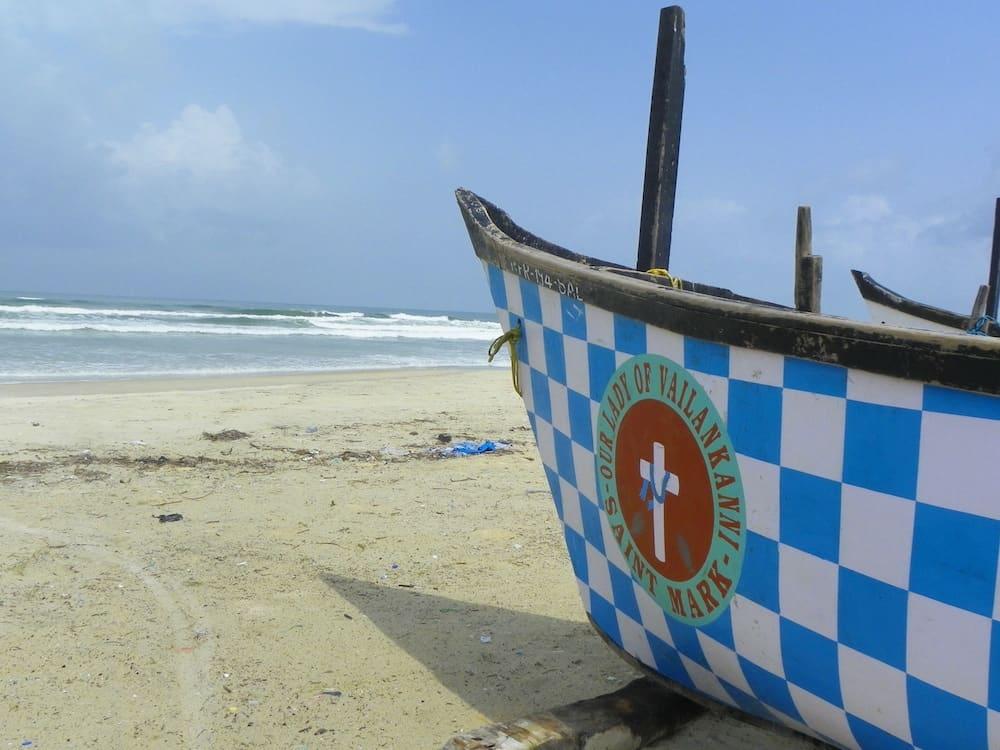
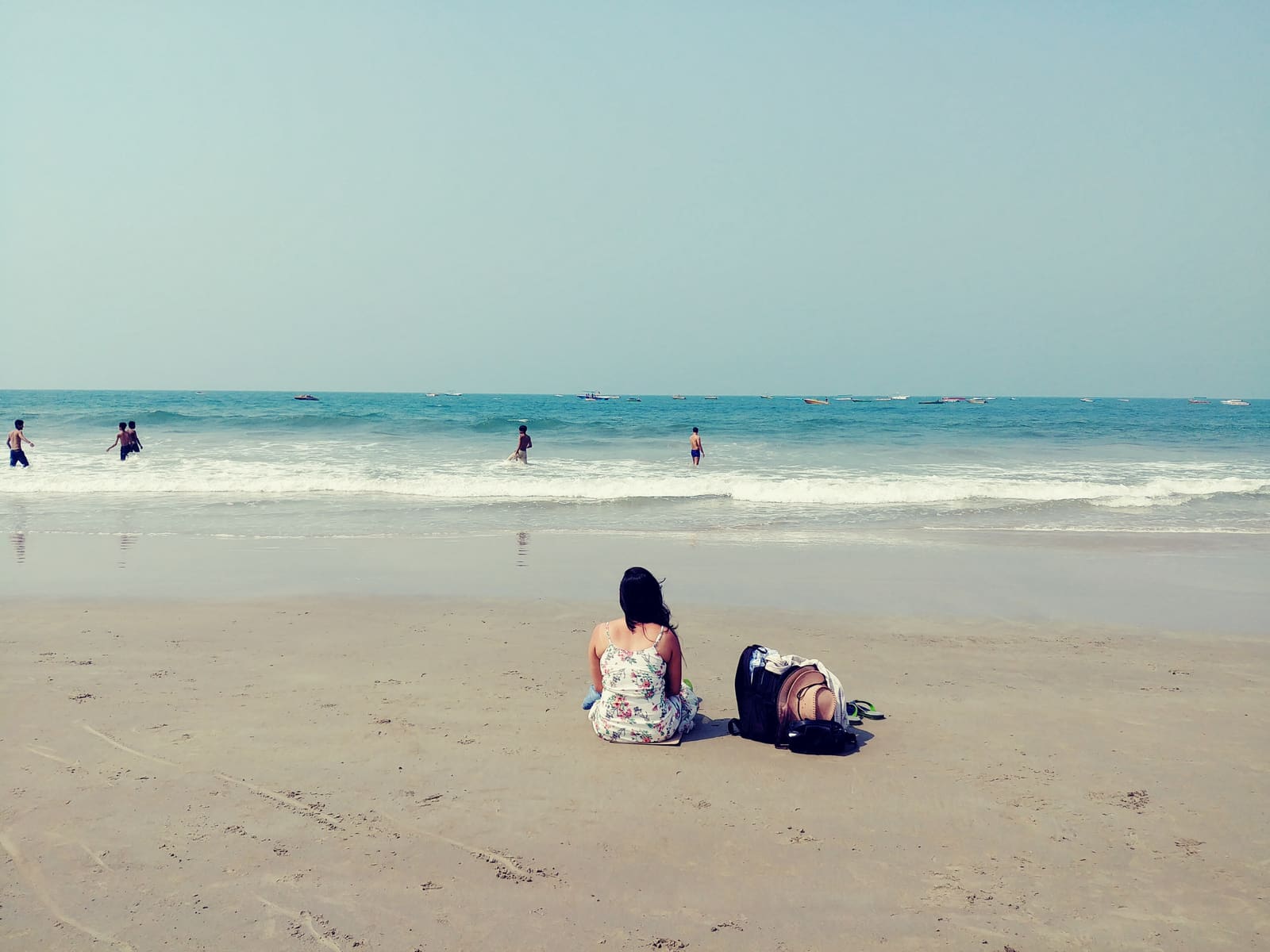
The bow of a blue and white chequered wooden fishing boat pulled up on Benaulim sand, with a painted emblem on the hull and the sea behind
Richard Randall from France · CC BY-SA 2.0

The morning catch

Boats on the sand, and fish sold where it lands.

Fishing is part of the working life of this coast. Beach boats go out before light and are hauled up on the sand later in the morning, and the catch is sorted and sold nearby. It is an ordinary working scene rather than a demonstration, which is what makes it worth watching.

Worth knowing. Keep clear of the ropes and the hauling, ask before taking close photographs, and do not handle the catch. The fish markets at Margao and Colva are where the trade is most visible.

A wide sweep of Colva beach with shallow surf and a few people wading in the water
Ymsarade · CC BY-SA 4.0

Colva and the northern beaches

The busier neighbour, and the sand beyond it.

Colva is the largest settlement on this stretch, with a long beach, a strip of shacks and the Church of Our Lady of Mercy. Continue north and the coast gives way to Sernabatim, Varca and Cavelossim — progressively quieter, and in places backed by casuarina rather than buildings.

Worth knowing. Colva is the busiest beach in South Goa on a Sunday. If you want quiet, go north of it instead of into it.

Inland

2 places, in no particular order.

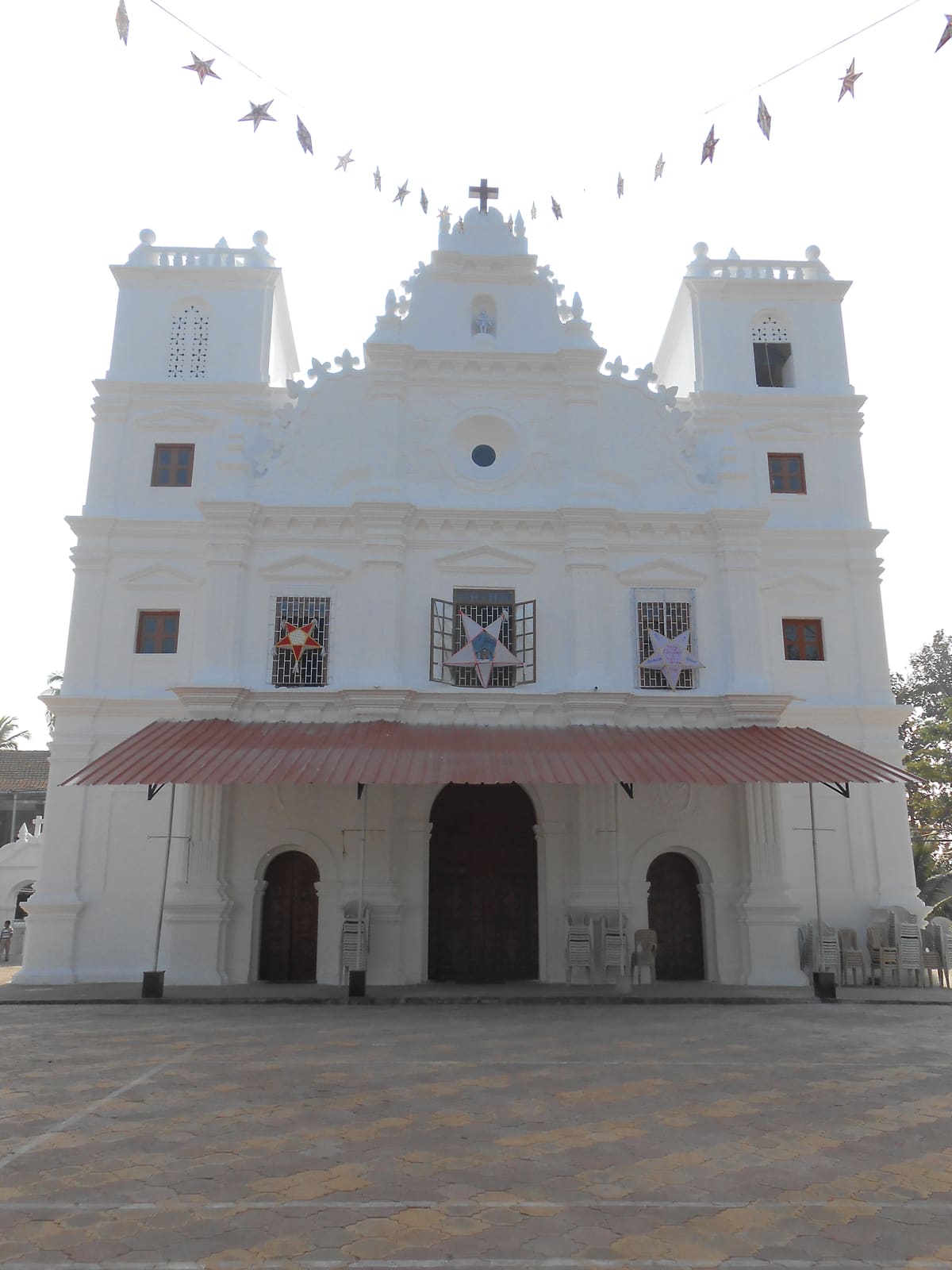
The whitewashed facade and bell tower of the Church of St John the Baptist at Benaulim, seen from the road
Frenia pamela barretto · CC BY-SA 3.0

Walking the village

Working Goan lanes, whitewashed houses and coconut plots.

Behind the beach Benaulim is still a working village: laterite-walled houses, painted gates, cows on the verges and coconut plots running down to the fields. The Church of St John the Baptist, rebuilt in the sixteenth century and raised again in the eighteenth, sits in the older part of the village.

Worth knowing. This is a residential village, not an attraction. Go in the cooler part of the morning, dress for a church visit, and ask before photographing people in their compounds.

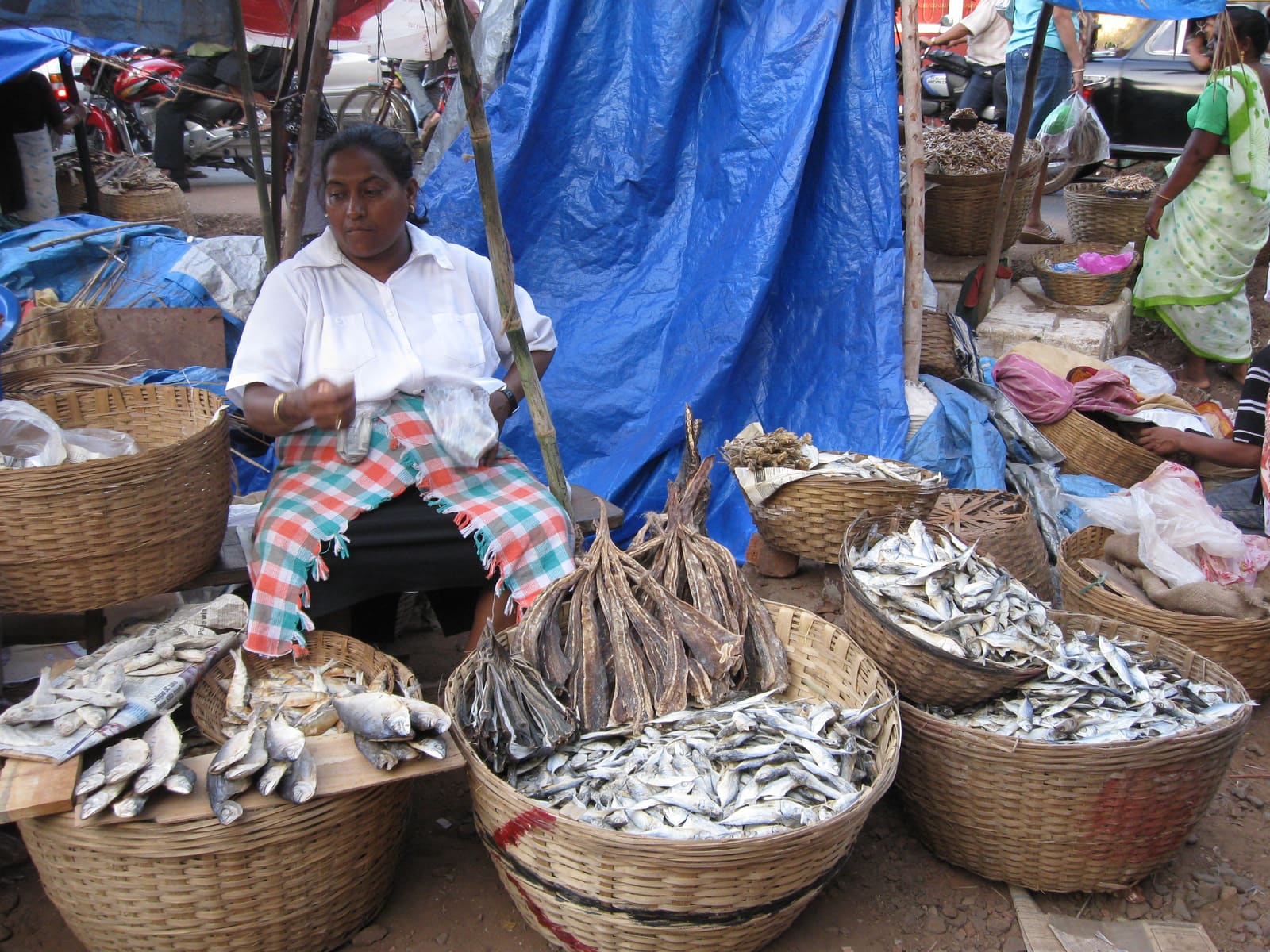
A fish seller seated behind woven baskets of dried and fresh fish at Margao market, under blue tarpaulin
Aaron C · CC BY-SA 2.0

Margao market

The market town of Salcete, and its covered municipal market.

Margao is the administrative and commercial centre of South Goa, with the old Portuguese quarter around the Largo de Igreja, the Municipal Council building, and a covered market where fish, spices, dried chillies and household goods are sold from baskets and stalls. It is a working town rather than a heritage site, which is the point.

Worth knowing. Mornings are busiest and best. Ask before photographing traders, and expect to be quoted two prices — the local one and the visitor one.

Down the coast

3 places, in no particular order.

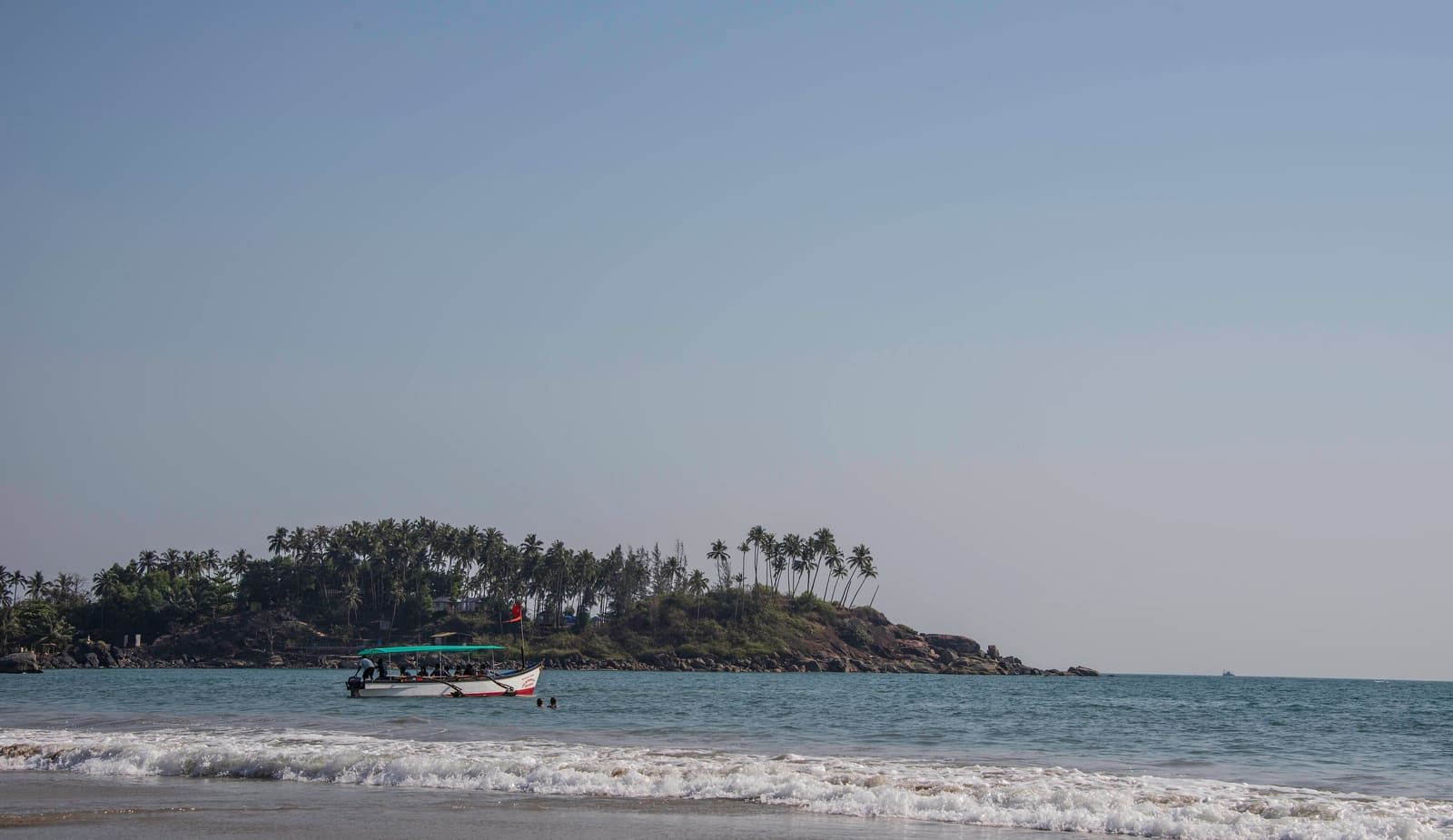
A calm bay at Palolem with a long curve of sand, coconut palms on a rocky headland and a small boat on the water
Mahabalaindia · CC BY-SA 4.0

Palolem

A curved bay in Canacona, and the calmest water in the south.

Palolem sits in a shallow crescent between two headlands, which keeps the water flat enough to swim in through most of the season. Palms come down to the sand at both ends, and the beach is lined with shacks and small guesthouses rather than hotels.

Worth knowing. The season is short and busy. Kayaks and boat trips are arranged on the beach itself; agree the price before you get in.

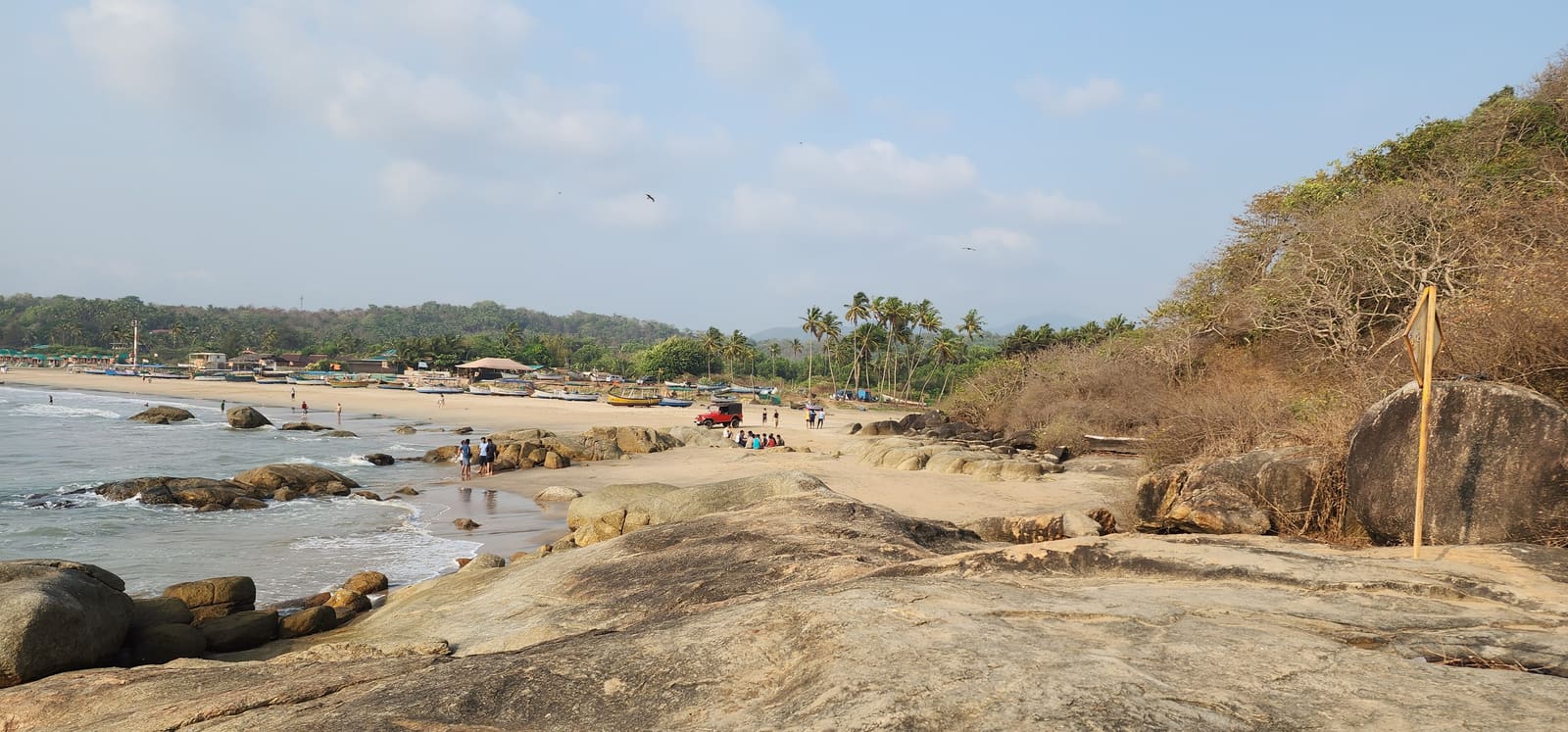
Agonda beach seen across smooth grey rocks, with fishing boats and palms along the top of the sand
JosephAssisFernandes · CC BY-SA 4.0

Agonda

Longer, emptier, and protected as a turtle beach.

Agonda is a straight three-kilometre beach with far less on it than Palolem, and the northern end is a designated nesting beach for olive ridley turtles. Huts are set back behind the sand in places, and the village behind is still small.

Worth knowing. Nesting season runs roughly from late autumn into spring, and the nests are roped off. Never walk on a marked nest or use a torch on the sand at night.

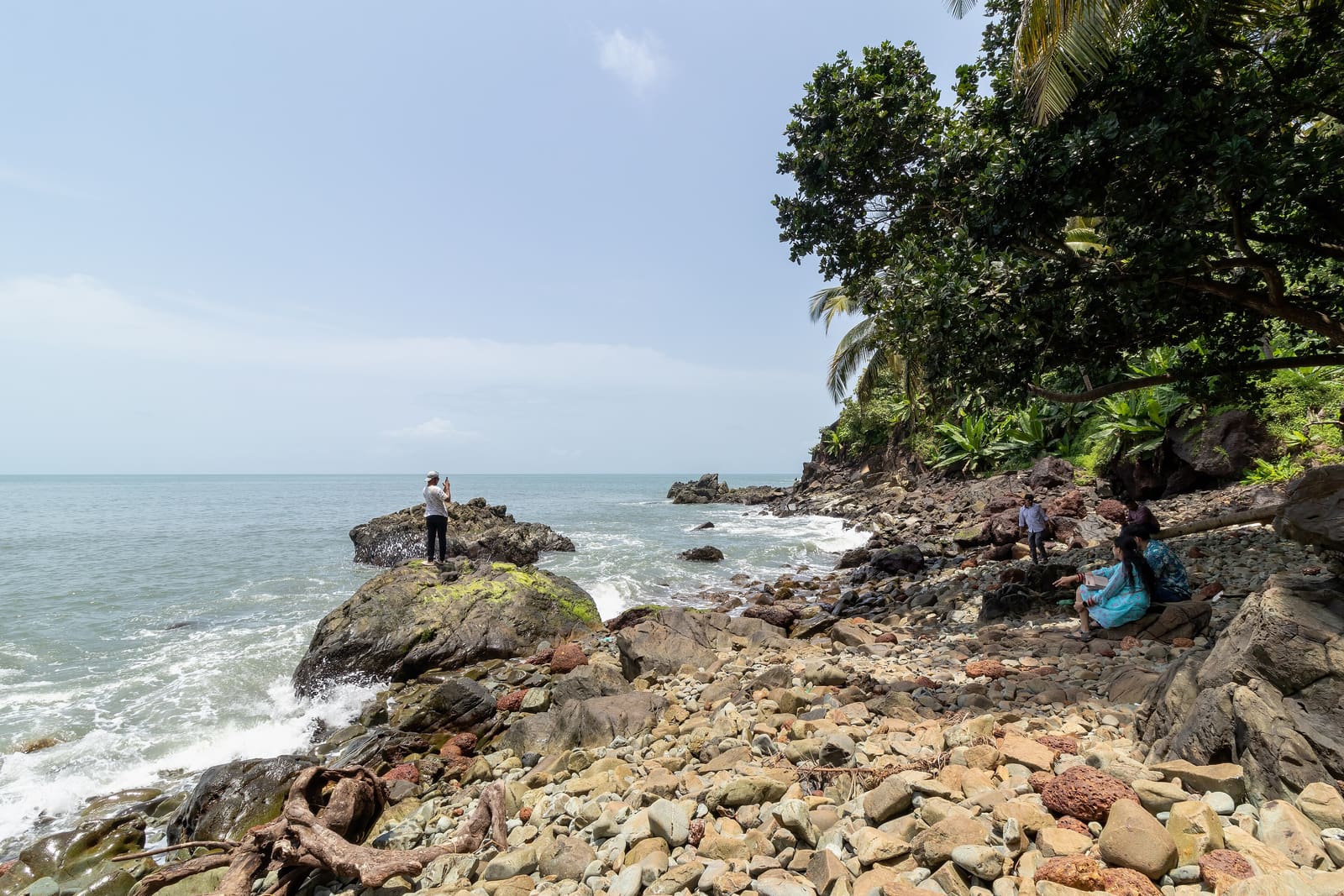
A rocky, pebble-strewn cove below Cabo de Rama fort, with palms and a headland beyond
iMahesh · CC BY-SA 4.0

Cabo de Rama fort

Cliffs, a ruined fort and a cove below it.

The southernmost fort on this coast stands on a headland above the sea, with Portuguese-era walls, a small chapel and a long view back up the coastline. Below it, a rough path drops to a pebble cove with rocks and palm shade.

Worth knowing. The fort itself is a short walk from the car park; the cove path is steep and uneven. Wear real shoes and go early, because there is very little shade on the plateau.

Up the coast

3 places, in no particular order.

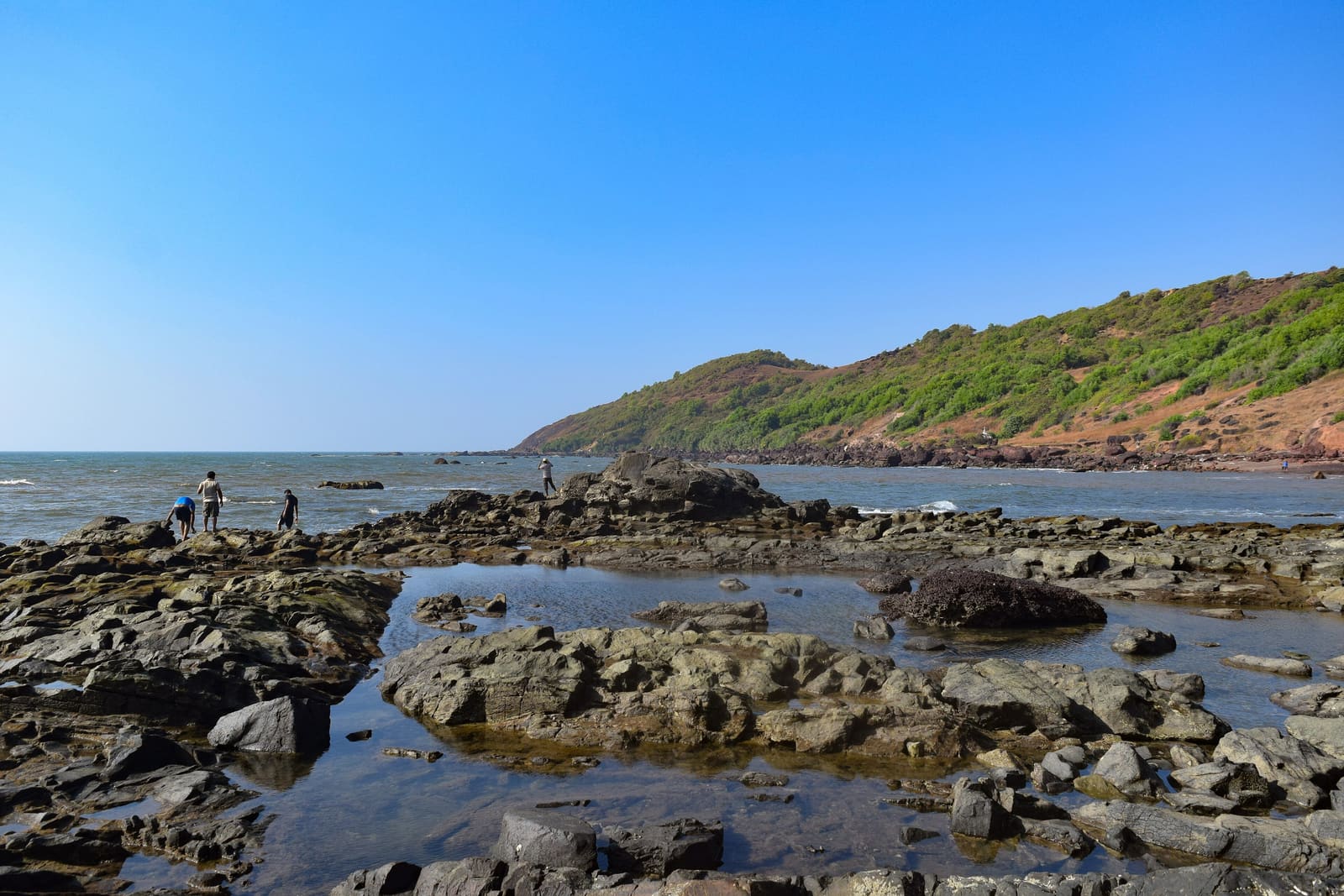
Rock pools and dark boulders on Anjuna beach at low tide, with a green headland curving away behind
Nikhilb239 · CC BY 3.0

Anjuna and the northern coast

Rock pools at low tide, and a very different Goa.

North of the Mandovi the coast changes character: Anjuna's rocks and rock pools at low tide, Vagator's red cliffs, and the flea market that made this stretch famous. It is louder, denser and more commercial than the south, and worth seeing for the contrast.

Worth knowing. The famous Wednesday flea market is seasonal. At low tide the rocks are slippery and the pools have urchins — wear something on your feet.

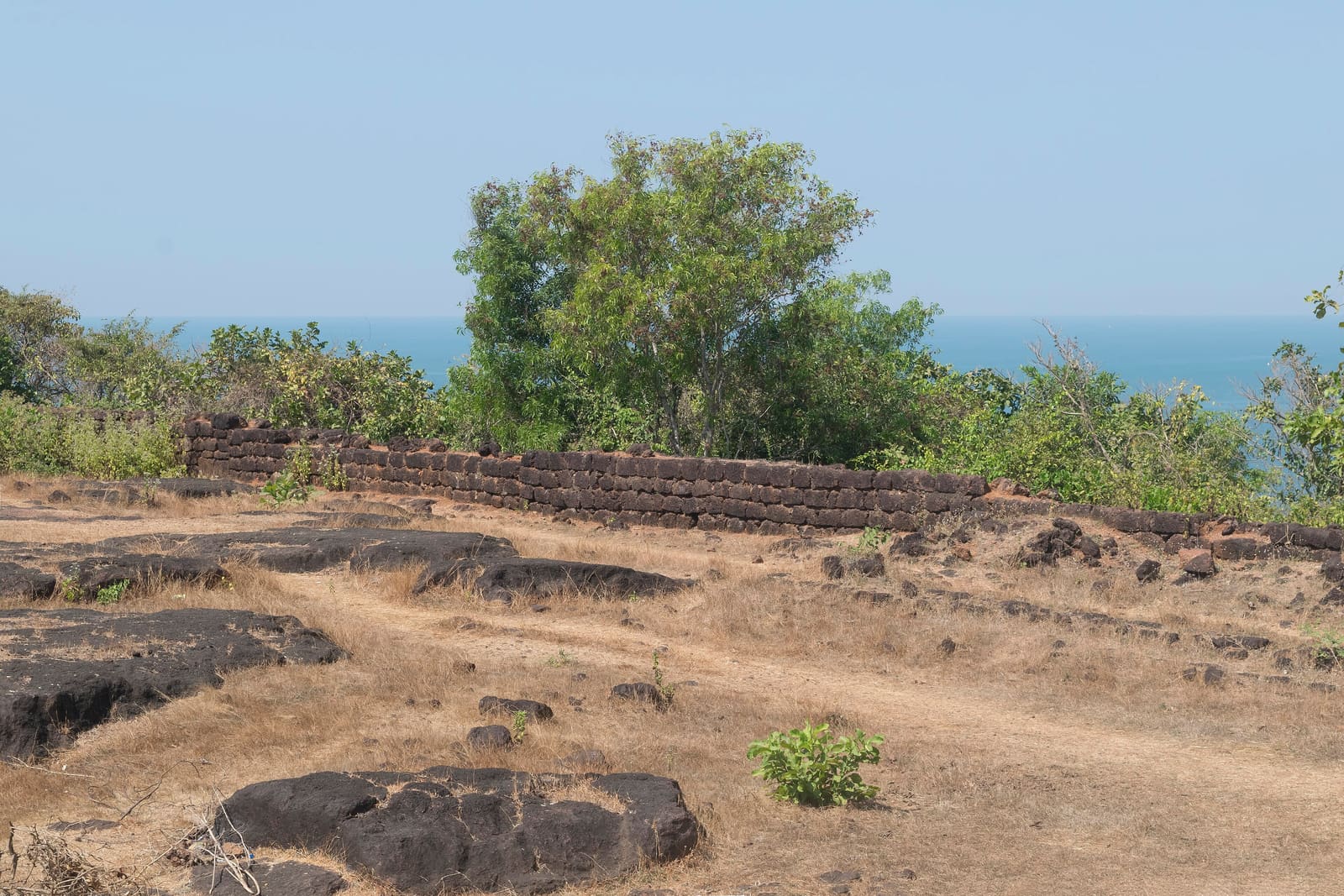
The low dark stone rampart of Chapora fort on a dry plateau, with a tree and the blue sea beyond
Nikhilb239 · CC BY 3.0

Chapora fort

The ruin above the river mouth, with a very long view.

A laterite fort on the headland above the Chapora river, now mostly walls and ramparts with a few trees inside. The walk up from the road is short and the reward is an uninterrupted view along the coast in both directions.

Worth knowing. There is nothing to buy on the hill and almost no shade. Take water, and avoid the middle of the day.

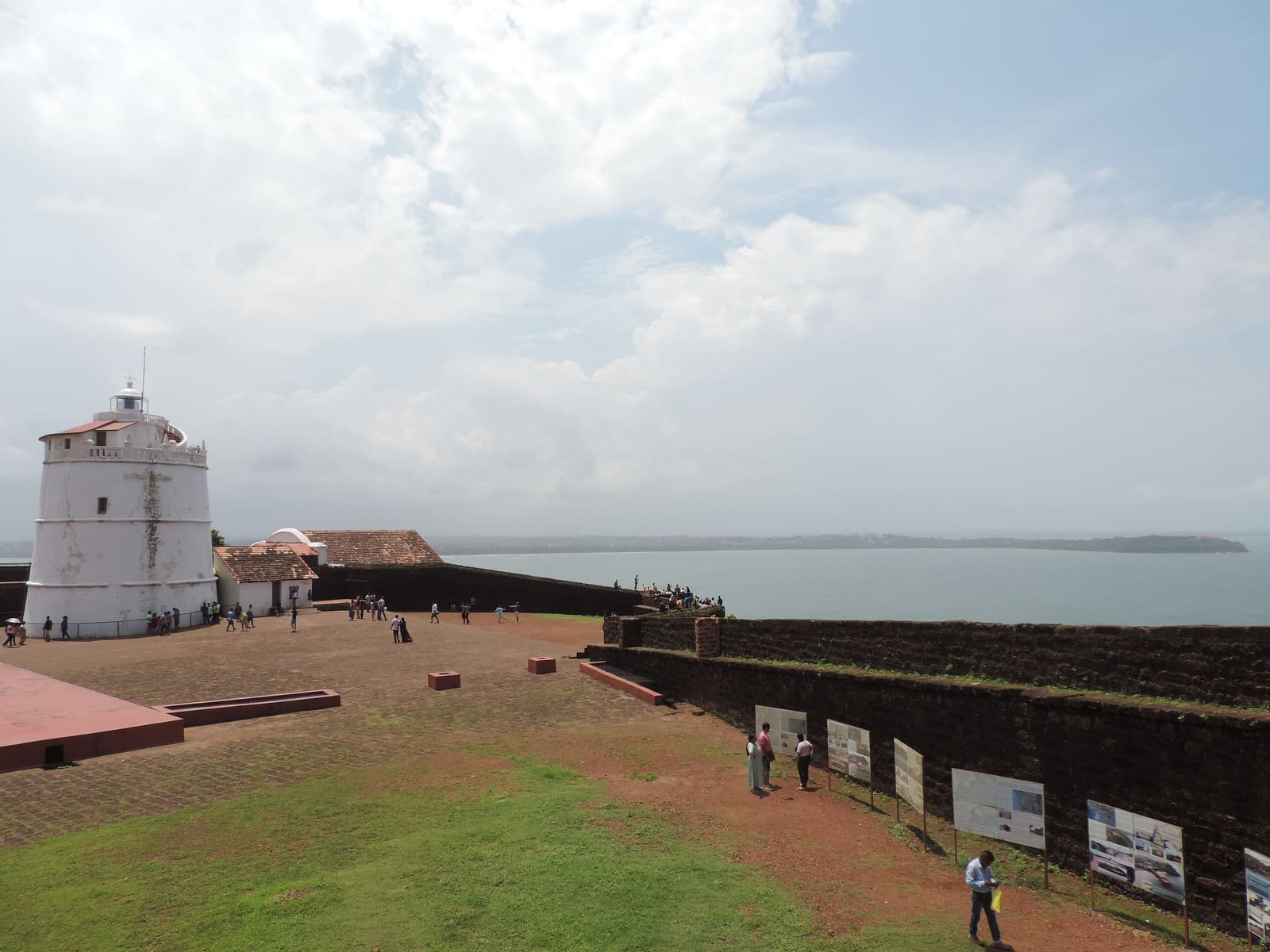
The white cylindrical lighthouse inside Aguada fort, with visitors on the ramparts and the sea beyond
Danger54 · CC BY-SA 4.0

Aguada fort and lighthouse

A seventeenth-century sea fort at the mouth of the Mandovi.

Built to guard the approach to Old Goa, Aguada is a large laterite fort with a moat, a cistern that once held a season's fresh water, and a white lighthouse on the seaward point. The ramparts look straight out over the Arabian Sea.

Worth knowing. The lighthouse itself has restricted hours. The fort grounds are open through the day and are exposed — early or late is far more comfortable.

Further afield

3 places, in no particular order.

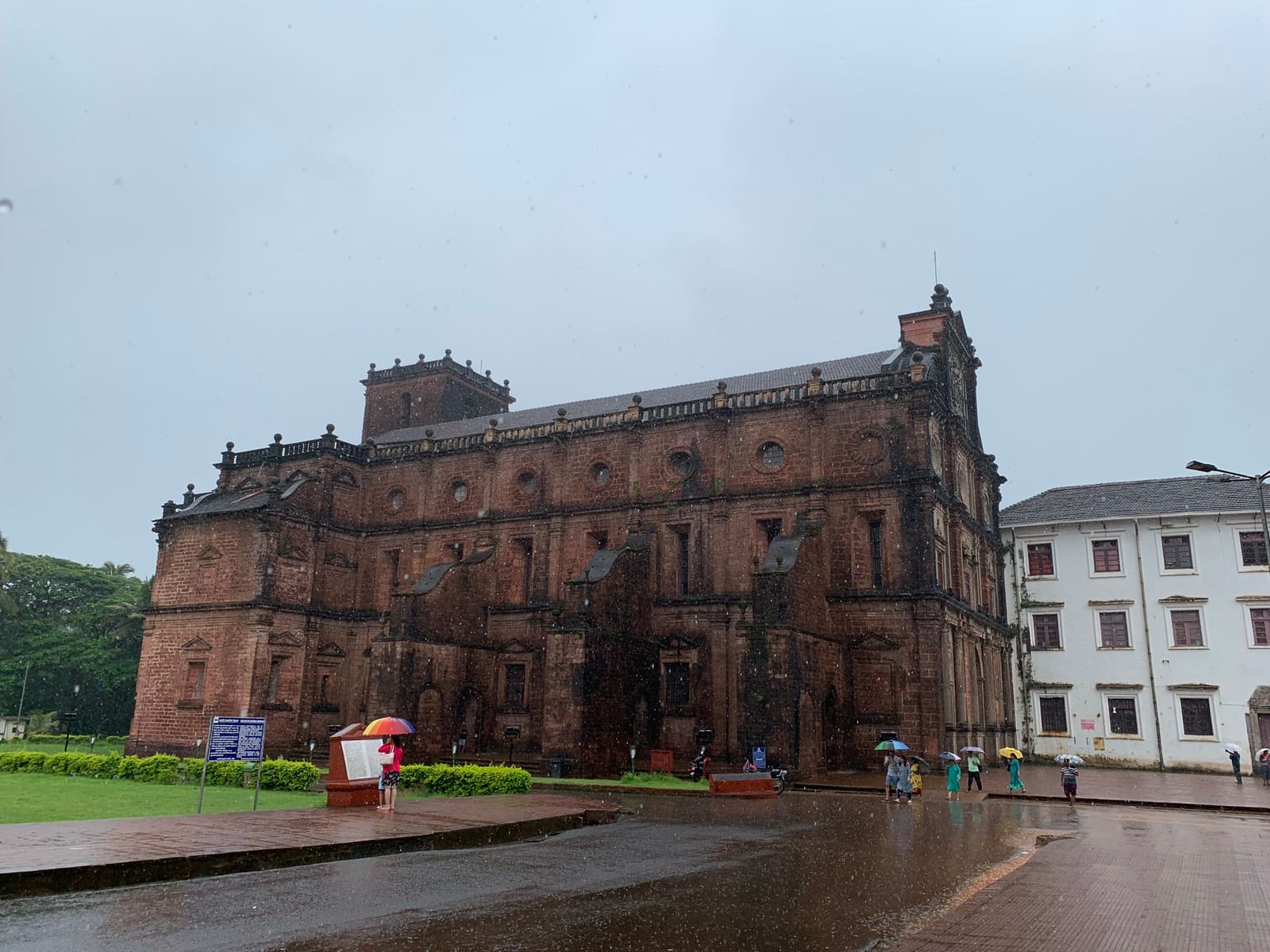
The red laterite elevation of the Basilica of Bom Jesus at Old Goa, with visitors sheltering under umbrellas in the rain
Slyronit · CC BY-SA 4.0

Old Goa and the basilicas

The Portuguese capital, and its World Heritage churches.

Old Goa was the capital of Portuguese India and still holds the Basilica of Bom Jesus, the Sé Cathedral and the Church of St Francis of Assisi within a short walk of one another. The Basilica, which holds the relics of St Francis Xavier, is a UNESCO World Heritage site.

Worth knowing. This is an active place of worship: shoulders and knees covered, no flash inside, and no photography during services. Weekday mornings are calmest.

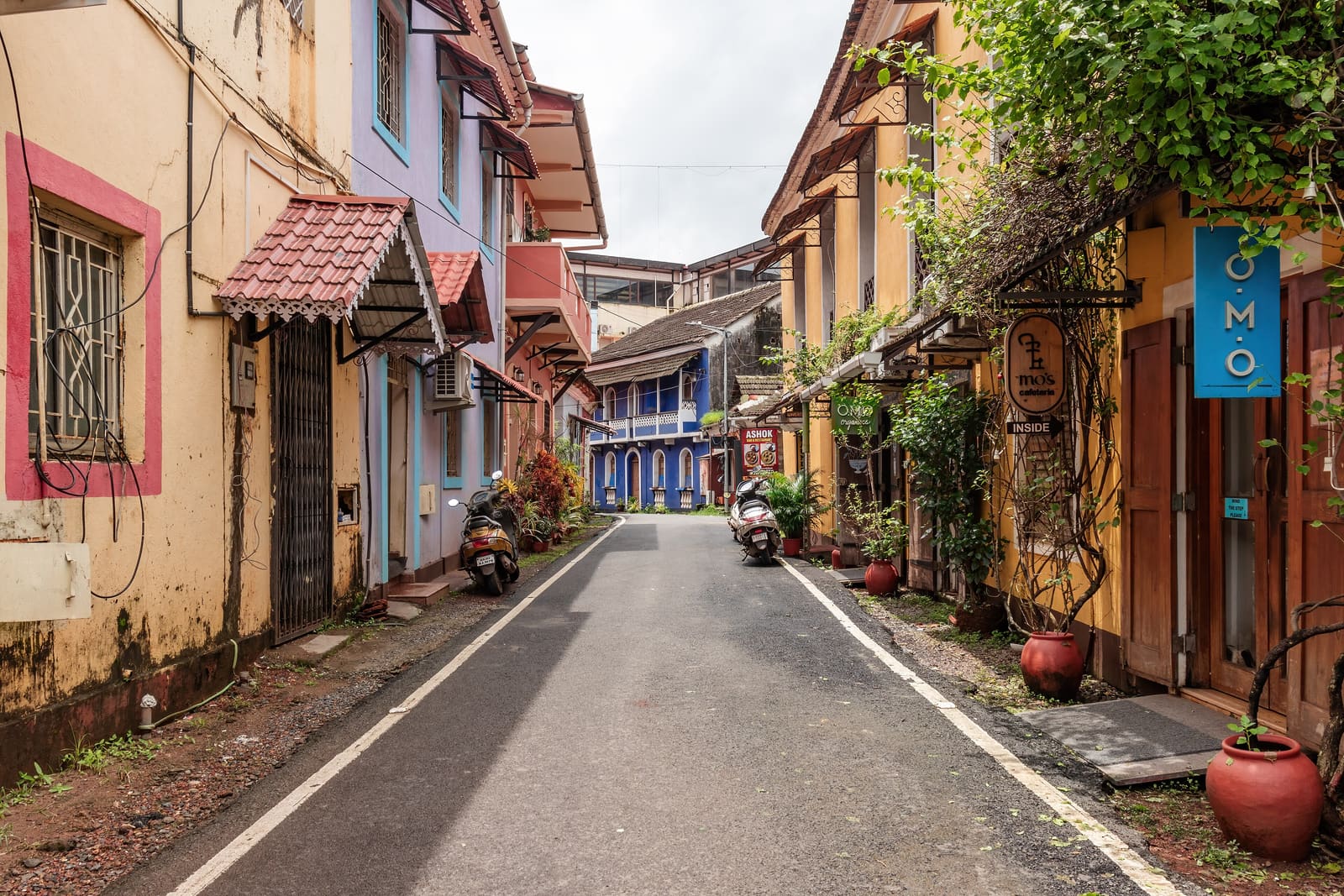
A narrow lane in Fontainhas, Panaji, lined with houses painted yellow, pink and blue, with scooters parked along the kerb
iMahesh · CC BY-SA 4.0

Fontainhas, Panaji

The Latin quarter, and its painted houses.

A small grid of lanes behind Panaji's main square, laid out in the eighteenth century and still lived in. The houses are painted in ochre, indigo, pink and green, with balconies, tiled roofs and red laterite plinths, and the whole quarter is walkable in an hour.

Worth knowing. People live here. Keep your voice down in the lanes, do not step into doorways for a photograph, and go before the heat builds.

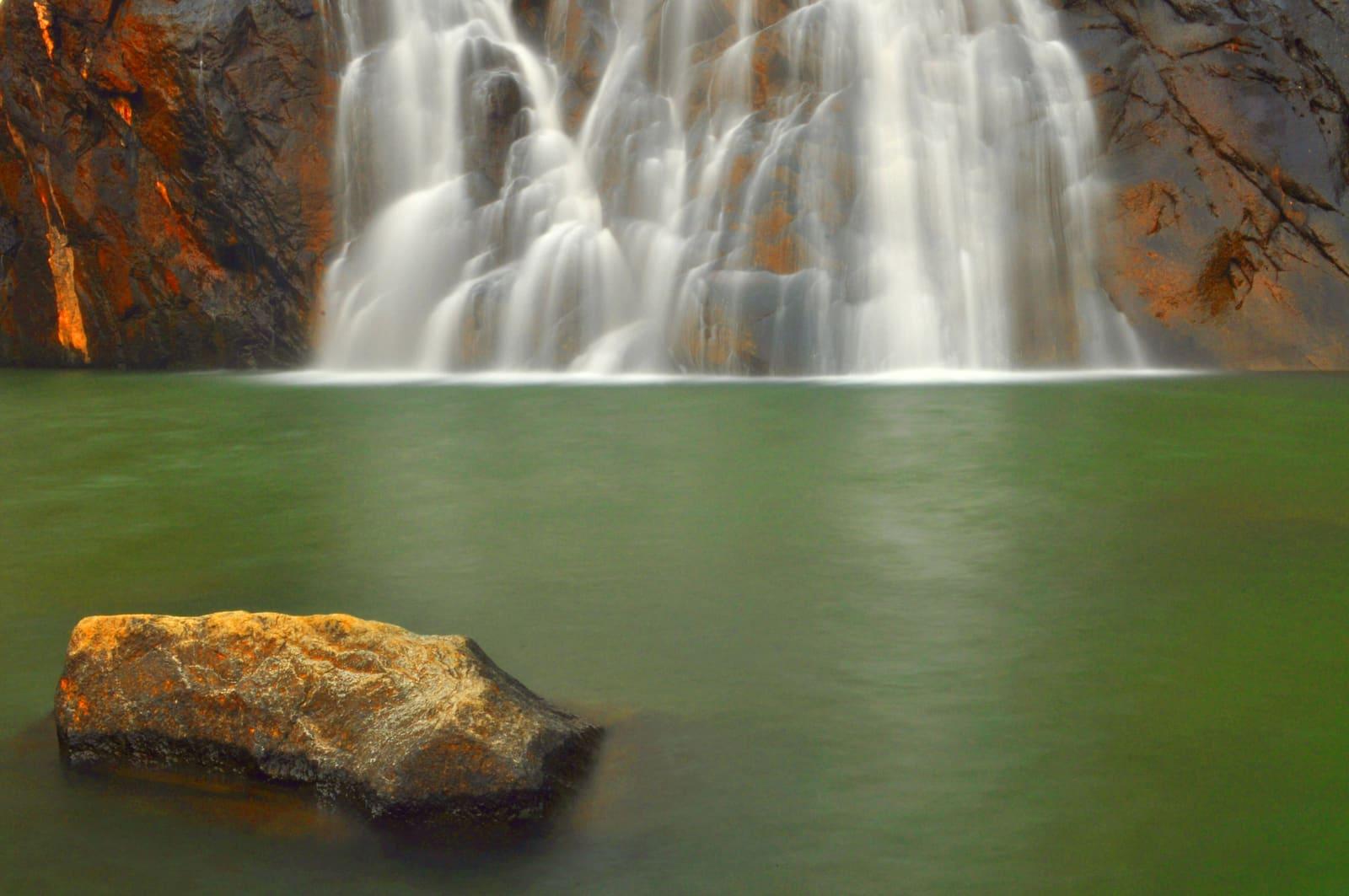
The wide white curtain of Dudhsagar Falls dropping into a green pool, with an orange-streaked rock in the foreground
soumyajit pramanick · CC BY-SA 2.0

Dudhsagar Falls

A four-tiered waterfall on the Mandovi, inside a sanctuary.

Dudhsagar drops in several tiers down a cliff face into a green pool on the Goa–Karnataka border, inside the Bhagwan Mahavir wildlife sanctuary. Access is controlled: vehicles go only as far as the base area and the last stretch is walked or taken by jeep.

Worth knowing. Entry is regulated and the falls are at their fullest in and just after the monsoon, when swimming is not allowed. Check the sanctuary's current rules before travelling — they change with the season.

Base yourself in the middle of it

Benaulim sits between the busy northern beaches and the quiet southern ones. The five booking platforms hold live availability; WhatsApp reaches the property if you would rather ask first.

WhatsApp the property

Or go straight there

Links open the property’s existing listings in a new tab. Opening a listing does not create a reservation. No offers are currently published.